Know your normal and act on changes says nurse who has breast cancer
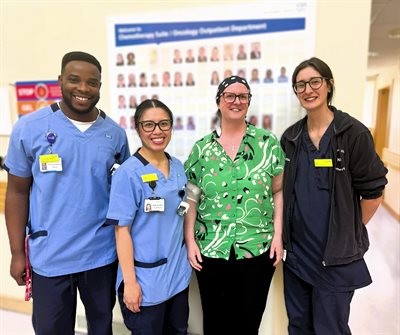
Northampton General Hospital nurse on her cancer treatment journey
A Northampton General Hospital nurse who has been diagnosed with breast cancer is urging people to ‘know their normal’ and get things checked out.
Cardiology Nurse Specialist, Susan Royse, was diagnosed with breast cancer 19 April 2026 after finding a painful lump.
She was initially reassured that the lump was likely to be a cyst. However, Susan felt that something was not right and her GP referred her to the breast clinic at Kettering General Hospital.
Tests revealed grade 3 invasive ductal carcinoma, a hormone receptor-positive and HER2-positive cancer, sometimes described as triple-positive breast cancer.
Now Susan is encouraging women and men across Northamptonshire to know what is normal for them, to attend breast screening when invited, and to seek medical advice if they notice a change.
She said: “My lump was unusual because it was painful. I was initially told it was unlikely to be cancer and was probably a cyst. But I knew my body, and I knew something wasn’t right.
“Please check your breasts or chest regularly and get to know what is normal for you. If you notice a change, or something does not feel right, seek medical advice.
“If you are still concerned, keep asking. You know your body best. Being persistent could help achieve an earlier diagnosis and it could save your life.”
Susan underwent surgery and lymph node removal before beginning the next stage of her treatment. Her care has been provided across University Hospitals of Northamptonshire, with support from specialist teams at Kettering General Hospital and Northampton General Hospital.
She now attends Northampton General Hospital each week for chemotherapy and is also receiving HER2-targeted treatment, with radiotherapy and hormone-blocking treatment forming part of her wider care plan.
She said: “The chemotherapy unit is extraordinarily busy, yet the staff are among the most caring, compassionate and professional people I have ever met.
“At one of the most vulnerable and frightening times of my life, they made me feel safe and comfortable. Their specialist knowledge, clinical skill and ability to create calm in the chaos have meant so much.
“They care for so many people, but every person is treated like a VIP, as a person, not just a patient.”
She has thanked the teams across Kettering General Hospital and Northampton General Hospital for their expertise, compassion and the reassurance they have shown throughout her diagnosis and treatment. She has also given special thanks to Katherine, Francis, Christian, Ellie, Belinda, Gemma, Dr Garofide and Beth for their care.
Bethan Read, Clinical Leader at Chemotherapy and Oncology OPD said: "It means so much to the chemotherapy team to hear feedback like this from patients.
“We are proud to care for people at such a vulnerable time in their lives, and it is wonderful to know that the compassion, expertise, and dedication shown by the chemotherapy suite staff has had a positive impact on Susan’s experience.
“Cancer treatment can be physically and emotionally challenging, and our priority is always to ensure that patients feel safe, supported and cared for throughout their journey.
“Everyone involved in Susan’s care will be touched by her kind words. Her story is also an important reminder to attend screening appointments when invited, be aware of any changes in your body and seek medical advice if something doesn't feel right. Early diagnosis can make a significant difference, and support is available every step of the way.
Susan’s experience carries an important message for everyone. Breast cancer can affect women, men, trans and non-binary people. Anyone who notices a new lump or another change in their breast or chest tissue should contact their GP and should not wait for a routine screening appointment.
Bethan said: “When breast cancer is identified early, treatment is more likely to be successful. Almost 100% of women diagnosed with stage 1 breast cancer in England survive for five years or more, compared with more than 30% of women diagnosed at stage 4. Survival figures describe groups of people and cannot predict an individual person’s outcome.”
The NHS breast screening programme is offered every three years to women registered with a GP from the age of 50 up to their 71st birthday, with first invitations usually arriving between the ages of 50 and 53.
People aged 71 or over can request an appointment every three years through their local screening service. Eligibility for trans and non-binary people can depend on how they are registered with their GP, and advice is available from GP practices and local breast screening services.
Screening can identify cancers before symptoms are noticed and when they may be too small to see or feel. However, cancer can develop between appointments, so people should contact their GP straight away if they notice a change rather than waiting for their next screening invitation.
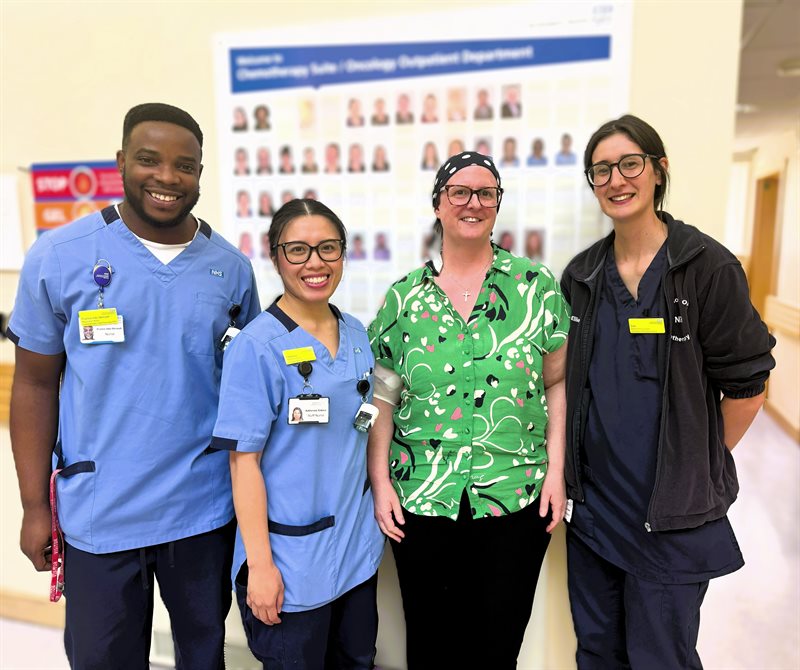
Susan Royse (wearing green) with some of the chemotherapy team who cared for her.
Posted on Friday 16th October 2026